

With the Pokémon Trading Card Game (TCG) booming in 2026, counterfeit cards have become increasingly common. Collectors and players alike face the risk of purchasing fake Pokémon cards that may look real but hold no value in tournaments or the secondary market.
In this expert guide, we teach you how to spot fake Pokémon cards, whether you’re buying singles, booster packs, or sealed boxes. By following these steps, you’ll protect your collection, investment, and gameplay experience.
Why Spotting Fake Pokémon Cards Matters
Counterfeit cards can:
- Damage your collection’s value
- Lead to disqualification in tournaments
- Waste money on items that cannot be graded or sold
Therefore, learning how to identify authentic Pokémon cards is essential for both collectors and competitive players.
Top Methods to Spot Fake Pokémon Cards
1. Inspect Card Quality and Texture
- Authentic Pokémon cards have a specific card stock and finish.
- Fake cards often feel flimsy or too thick, and colors may appear dull or oversaturated.
- Compare suspicious cards to verified originals for texture and flexibility.
2. Check the Holographic Pattern
- Genuine holo cards feature consistent foiling with clear patterns.
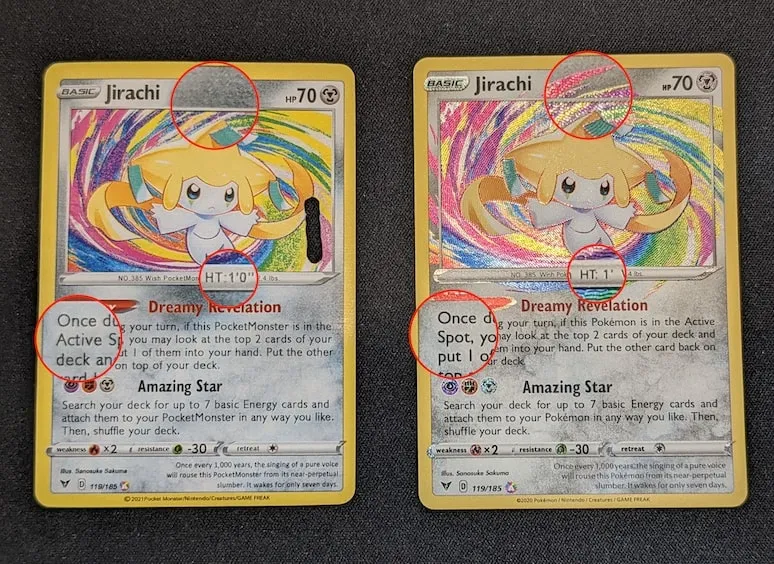
- Counterfeit holos may have blurry or irregular shine, often misaligned with the card art.
3. Examine the Print Quality
- Look at the text, font, and borders.
- Real Pokémon cards have sharp, evenly printed text and edges.
- Fakes often have misaligned fonts, blurry text, or inconsistent spacing.
4. Verify the Card Back
- Pokémon card backs have a specific shade of blue, logo positioning, and ball pattern.
- Counterfeit cards often have slightly off-color blues or incorrect Poké Ball placement.
5. Compare Card Weight
- Use a precision scale to check card weight.
- Authentic cards have uniform weight; fakes may feel lighter or heavier.
6. Look for Authenticity Marks
- Check for:
- Copyright symbols
- Edition marks (1st Edition stamp, if applicable)
- Set symbols in the bottom-right corner
Missing or inconsistent marks can indicate counterfeit cards.
7. Examine Edges and Corners
- Authentic cards have smooth, rounded edges.
- Fake cards may show uneven cutting, sharp edges, or peeling layers.
8. Test Light Transmission
- Hold the card up to bright light.
- Authentic Pokémon cards are semi-opaque with a slight layer structure.
- Fake cards may let too much light pass through or feel overly transparent.
Buying Tips to Avoid Fake Pokémon Cards
- Purchase from Trusted Sellers – Always buy from official Pokémon Center TCG or verified retailers.
- Check Reviews and Ratings – Online marketplaces often show seller feedback.
- Buy Sealed Products – Sealed booster boxes and Elite Trainer Boxes minimize the risk of counterfeits.
- Avoid Suspiciously Low Prices – Extremely cheap cards are often fake.
- Use Grading Services – PSA or Beckett-graded cards ensure authenticity.
How to Protect Your Collection
- Store cards in sleeves and toploaders
- Avoid exposure to sunlight and moisture
- Organize your collection and inspect new acquisitions
- Keep receipts and documentation for valuable purchases
By taking these precautions, you safeguard your Pokémon collection and investment.
Conclusion
Spotting fake Pokémon cards requires attention to detail, practice, and awareness of key authenticity markers. By following this expert guide, you can confidently identify authentic cards, avoid scams, and protect both your gameplay and investment.
For verified Pokémon TCG products, visit Pokémon Center TCG, where every card and sealed product is guaranteed authentic and shipped safely worldwide.